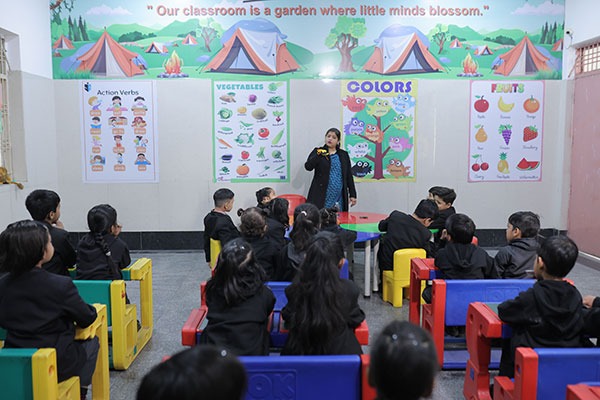
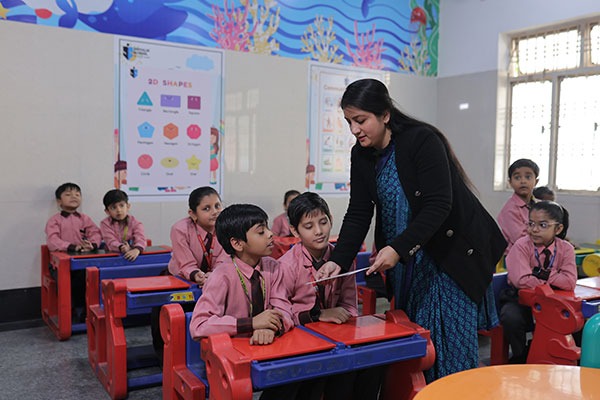
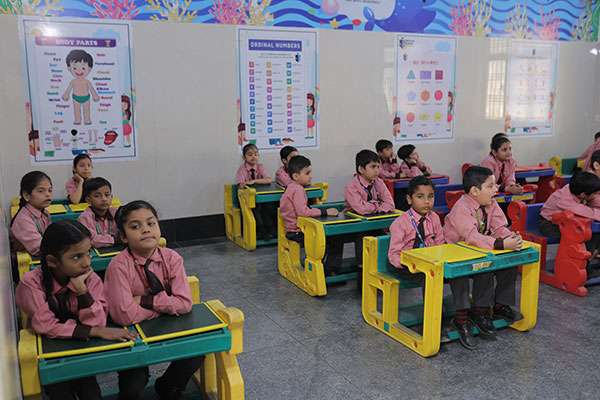
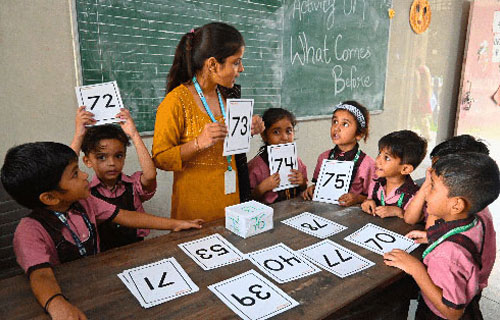
Academics - clear teaching, strong foundations, confident outcomes

Shivalik Cambridge College follows the CBSE framework and focuses on conceptual clarity, purposeful practice, and a culture of disciplined learning.

At - A - Glance - What Parents Can Rely On

Strong Foundations

Literacy, Numeracy, And Scientific Thinking Are Built Step-By-Step.

Visible Learning

Notebooks, Lab Work, Projects, And Assessments Show Progress Clearly.

Timely Support

When A Child Struggles, Support Is Planned Early - Not Left For The End.

Balanced Development

Academics + Values + Skills + Co-Curricular Life.

Our Teaching Rhythm (Shivalik Learning Cycle)

A consistent learning routine helps students feel secure and succeed:

Connect – begin with a question, example, or prior knowledge.

Explain – teach the concept clearly in simple steps.

Model – show “how to do it” with worked examples.

Practise – guided practice first, then independent practice.

Check – quick checks to confirm understanding.

Apply – projects, experiments, writing, or problem sets that deepen mastery.

Pathways By Stage (Short)

Pre-Primary (Montessori-inspired, play-way learning)

Active learning through stories, games, movement, and hands-on activities.

Focus: language, number sense, motor skills, social learning, confidence.

Primary (Classes I-V)

Strong reading and writing routines, clear maths foundations, curiosity in EVS/science.

Focus: habits, attention, practice, and confident communication.

Middle (Classes VI-VIII)

Deeper concept learning, structured writing, problem-solving, and study skills.

Focus: organised learning, projects, and stronger reasoning.

Secondary & Senior Secondary (Classes IX-XII)

Board-aligned teaching, revision plans, and exam readiness.

Focus: discipline, conceptual clarity, practice papers, and steady mentoring.

Assessment & Progress (Parent-Friendly)

Regular classwork + periodic assessments

Feedback that names the "next step"

Extra practice and re-teaching when needed

Enrichment tasks for students who are ready to go further

Learning Support & Well-Being

If a child needs help (academically or emotionally), families are encouraged to share concerns early. Support can include:

  • Extra Practice Sets
  • Small-Group Help Sessions
  • Teacher Mentoring and Parent Meetings
  • Referral to Counselling/Support Pathways Where Appropriate

Faqs

Through planned revision, practice papers, clear schedules, and teacher mentoring - without last-minute panic.

Through guided participation, structured speaking opportunities, clubs, and supportive teacher encouragement.

Homework is used to build practice and responsibility. The exact amount varies by grade; the key is consistency without overload.

Through revision plans, practice papers, doubt clearing, and exam strategy guidance - while maintaining student wellbeing.

Reading, writing, speaking opportunities and language support where required.

Support includes re-teaching, targeted practice, and teacher guidance, coordinated with parent communication.

Microcopy options (use as sidebars / small strips)

  • "Concept clarity first. Speed later."
  • "Practice builds confidence."

Teachers use differentiated practice: scaffolds for learners who need support and extension questions or deeper tasks for learners who are ready. The goal is growth for every child, not a one-size-fits-all pace.

By starting early with fundamentals, planned revision, frequent practice, and exam strategy. When the base is strong, board preparation becomes structured - not panic-driven.

Parents do not need to 'teach' every day. The best support is routine: a quiet study space, a reading habit, small checks on homework, and timely communication with teachers when concerns appear.

Look for stronger notebooks, fewer repeated mistakes, improved reading and writing, better confidence in explaining answers, and steady performance across topics - not only one high test score.


✕

Enquire Now